
Electrical safety is essential to the operation of UK businesses, underpinning everything from lighting and power distribution to essential workplace equipment and IT systems. As a result, these systems are subject to strict legal requirements designed to protect people and ensure premises remain compliant.
In this article, we cover what you need to know about electrical safety regulations for UK businesses, including why they matter, key regulations explained, and how a professional electrical contractor, such as BETEC, can help organisations remain safe and meet required standards.
Key Takeaways
- Key UK electrical safety regulations for UK businesses are the Electricity at Work Regulations 1989, BS 7671, and the Health and Safety at Work etc. Act 1974, which together establish the core legal and technical framework for ensuring electrical systems are safe to install, use, and maintain.
- Electrical compliance is typically assessed and maintained in UK businesses through Electrical Installation Condition Reports (EICRs) and Portable Appliance Testing (PAT), practical methods used to check and maintain the safety of fixed installations and portable equipment.
- BETEC Electrical Contractors provides trusted, fully accredited electrical services that help businesses stay safe, compliant, and operating reliably.
Why Do Electrical Safety Regulations Matter for UK Businesses?
UK businesses have a legal duty of care to ensure that electrical systems within their premises are safe, properly maintained, and suitable for ongoing use. This responsibility sits with employers, landlords, and other duty holders under UK health and safety legislation, and it applies across all commercial environments, regardless of size or sector.
These regulations exist because electrical systems are not static; they deteriorate over time, are often adapted to meet changing operational demands, and can quickly become unsafe if not properly managed.
Compliance is not just a legal requirement, but is essential for:
- Preventing workplace accidents and electrical fires.
- Protecting staff, customers, and property assets.
- Avoiding enforcement action or prosecution.
- Reducing insurance risk and potential business disruption.
What Are the Key UK Electrical Safety Regulations for UK Businesses?
Electrical safety in UK workplaces is governed by a combination of legislation and recognised industry standards. Together, these set out the legal duties, design expectations, and safety principles that businesses must follow to ensure electrical systems are installed and maintained safely.
1. Electricity at Work Regulations 1989
The Electricity at Work Regulations 1989 is the primary piece of legislation covering electrical safety in UK workplaces. It places a legal duty on employers and duty holders to ensure that all electrical systems, equipment, and installations are maintained in a condition that prevents danger. This includes fixed wiring, distribution systems, and portable appliances used within the workplace.
The regulations do not prescribe exactly how compliance must be achieved, but instead require that electrical systems are kept safe “so far as is reasonably practicable.” This means businesses must ensure electrical equipment is properly installed, regularly inspected where necessary, and repaired or replaced if it poses a risk.
2. BS 7671 (IET Wiring Regulations)
BS 7671, commonly referred to as the IET Wiring Regulations, is the nationally recognised standard for electrical installation design, testing, and maintenance in the UK. Although it is not law, it is widely accepted as the benchmark for safe electrical work and is regularly referenced in compliance and certification processes.
It sets out detailed technical requirements for how electrical installations should be designed and installed, covering areas such as wiring systems, protective devices, earthing, and circuit design. Compliance with BS 7671 is often used as evidence that electrical work has been carried out to a safe and professional standard.
3. Health and Safety at Work etc. Act 1974
The Health and Safety at Work etc. Act 1974 is the overarching piece of legislation that governs workplace health and safety in the UK. It requires employers to take reasonable steps to ensure the health, safety, and welfare of employees and anyone affected by their operations.
Electrical safety falls within this broader duty of care, meaning businesses must consider electrical risks as part of their overall workplace safety obligations. While it does not focus solely on electrical systems, it provides the legal foundation that supports enforcement action where unsafe electrical conditions are identified.
How Is Electrical Compliance Assessed & Maintained?
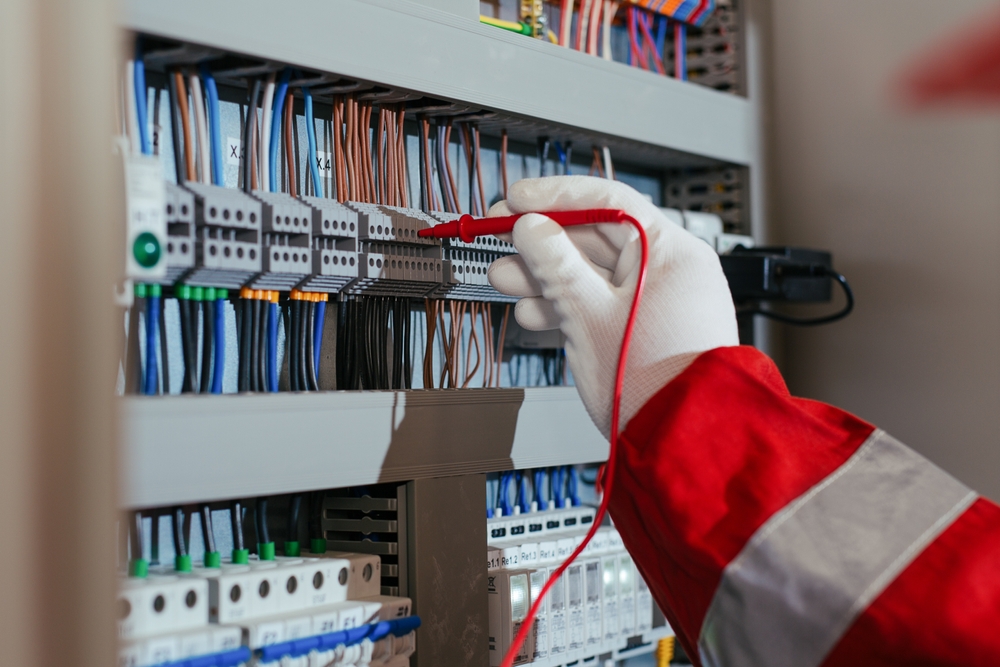
In practice, electrical compliance is demonstrated through a combination of structured inspections and ongoing testing. The two most common methods used in UK businesses are Electrical Installation Condition Reports (EICRs) and Portable Appliance Testing (PAT).
These are practical tools for assessing the safety of electrical systems and equipment, rather than regulations themselves, and they help businesses demonstrate that their electrical infrastructure is properly managed over time.
Electrical Installation Condition Reports (EICRs)
An Electrical Installation Condition Report (EICR) is a formal inspection of a building’s fixed electrical installation, including wiring, distribution boards, and associated systems. Its purpose is to assess the overall condition of the installation and identify any deterioration, defects, or safety risks that could affect ongoing use.
EICRs are typically carried out at regular intervals, depending on the type of premises and level of use. In commercial environments, this is often every 5 years, although higher-risk or heavily used sites may require more frequent inspections.
The inspection results in a formal report detailing the condition of the installation, including any defects identified and recommendations for remedial work where necessary.
Portable Appliance Testing (PAT)
Portable Appliance Testing (PAT) applies to electrical equipment that is plugged in and used within a business, particularly items that are moved or handled regularly, such as office equipment and tools. It involves a combination of visual inspection and electrical testing to confirm that equipment remains safe to use.
Unlike fixed installation inspections, PAT testing does not follow a single fixed legal interval. Instead, frequency is determined by risk, taking into account the type of equipment, how often it is used, and the working environment. In many office environments, this may be carried out annually, while higher-risk settings may require more regular checks.
Once tested, equipment is typically labelled with a pass sticker showing the inspection date and status, providing a clear visual indication that it is safe to use.
What Are Common Electrical Compliance Issues?
The following are some of the most common electrical compliance issues found in commercial properties:
| Issue | What it means in practice |
|---|---|
| Outdated wiring | Older electrical installations that may no longer meet modern safety expectations or usage demands |
| Overloaded circuits | Too many devices drawing power from a single circuit, increasing risk of overheating or failure |
| Poor maintenance planning | Lack of scheduled inspections or proactive checks to identify developing faults |
| Unqualified or uncertified electrical work | Electrical work carried out by individuals who are not properly trained or registered |
| Missing or incomplete documentation | Lack of records such as test results, certificates, or inspection reports needed to demonstrate compliance |
What Are the Consequences of Non-Compliance?
Failing to meet electrical safety obligations can lead to serious legal, financial, and operational consequences for businesses, particularly where unsafe systems are identified during inspections or incidents occur.
- Enforcement action from the Health and Safety Executive (HSE): The HSE may issue formal enforcement notices requiring remedial action, and in serious cases, can restrict or stop business operations until issues are resolved.
- Financial penalties or prosecution: Businesses and responsible individuals may face significant fines or legal proceedings where breaches of health and safety law are proven.
- Insurance claims invalidated: If electrical systems are found to be poorly maintained or non-compliant, insurers may refuse to pay out on claims related to electrical faults or fire damage.
- Increased risk of fire or electrical accidents: Poorly managed electrical systems significantly increase the likelihood of faults, overheating, or fire incidents within commercial premises.
How Can Businesses Stay Compliant?
Maintaining electrical safety compliance relies on a proactive approach that combines structured maintenance, accurate record-keeping, and regular inspections across all electrical systems and equipment.
- Regular EICRs and PAT: Used as part of a planned approach to monitoring electrical safety across both fixed installations and portable equipment, helping identify issues early and support safe operation of systems.
- Accurate record keeping: Maintaining up-to-date documentation, including certificates, test results, and inspection reports, provides evidence of ongoing compliance and supports audits or insurance requirements.
- Regular risk assessments: Periodic assessments help identify potential electrical hazards within the workplace and ensure appropriate controls are in place to reduce risk.
- Use of competent, registered electrical contractors: Engaging qualified professionals, such as BETEC Electrical Contractors, ensures that all electrical work, inspections, and repairs are carried out safely and in line with recognised industry standards.
How BETEC Electrical Contractors Can Help
“At BETEC, we help businesses stay safe, compliant, and confident in the reliability of their electrical systems through practical, expert-led support,” says Jamie Hicks, Director.
BETEC Electrical Contractors provides reliable, fully licensed electrical services for both residential and commercial clients, offering support with safe, practical electrical solutions tailored to your needs.
Here are a few reasons why our clients choose us:
- We are a NICEIC-accredited contractor, meaning that we are independently assessed to ensure all electrical work is carried out safely and in line with recognised UK standards. This gives our clients confidence that our work consistently meets current expectations for safety and compliance.
- We work across a range of commercial sectors, including golf and leisure, heritage, marina and coastal, office and industrial, and sensitive and security-focused settings.
- With over 40 years of hands-on industry experience, our team delivers work built on technical expertise, compliance knowledge, and a strong focus on quality and safety.
Also read: What Is NICEIC Accreditation?
Looking for a trusted electrical contractor to help keep your business safe and compliant? Get in touch with BETEC Electrical Contractors in Guildford to discuss your requirements.