
Choosing the right light bulb can make a noticeable difference to the lighting, energy consumption, and comfort of a home or business. However, with different brightness levels, colour temperatures, and fitting types available, knowing which bulb to buy is not always straightforward.
The UK has also phased out the sale of most traditional halogen bulbs and many fluorescent lamps, making LED lighting the main option for everyday replacement bulbs. Understanding the differences between modern LED products can help you choose suitable lighting without spending more on electricity than necessary.
With over 40 years of electrical industry experience, BETEC Electrical provides electrical services for residential and commercial properties across Guildford and Surrey. In this guide, we explain how light bulbs work, what to look for when buying replacements, and how to choose suitable lighting for different spaces.
Key Takeaways
LED bulbs are the main choice for modern everyday lighting. They use less electricity than traditional incandescent and halogen bulbs, and generally last longer.
Most general-purpose halogen bulbs and many fluorescent lamps have been phased out of sale in the UK. Some specialist exemptions remain, but LED alternatives are widely available.
Lumens measure brightness, while watts measure power consumption. Comparing lumens helps you choose the right amount of light without relying on outdated wattage equivalents.
The right bulb depends on its fitting, colour temperature, and intended use. Checking compatibility before purchasing helps avoid problems with existing light fittings and dimmer switches.
What Types of Light Bulbs Are Available in the UK?
If you have recently bought a replacement bulb, you may have noticed that the options on the shelf look different from those available several years ago. This reflects changes in lighting technology and UK regulations designed to improve energy efficiency.
Understanding which technologies are available today helps you make a more informed choice.
LED Bulbs
LED stands for light-emitting diode. These bulbs use semiconductor technology to produce light and are widely used in homes, offices, shops, and other commercial premises.
LED bulbs are available in a wide range of shapes, brightness levels, colour temperatures, and fittings. This makes them suitable for most everyday lighting applications, including ceiling lights, lamps, and spotlights.
Their main advantages include:
- Energy efficiency: LEDs generally use significantly less electricity than traditional incandescent bulbs to produce a similar amount of light.
- Long lifespan: They typically last longer than older bulb technologies, reducing the frequency of replacements.
- Lower heat output: LEDs generally release less heat than incandescent and halogen bulbs.
- Choice of lighting: Different colour temperatures and brightness levels make it easier to select suitable lighting for individual rooms.
LED bulbs are usually the best starting point when replacing an existing household or commercial bulb. However, it is still important to check the fitting, brightness, and compatibility with any lighting controls.
What Happened to Halogen Bulbs?
Halogen bulbs were once common in UK homes and businesses, particularly in ceiling spotlights and other directional lighting. They produced light by heating a filament, which meant they consumed more electricity and generated more heat than modern LED alternatives.
The UK phased out the sale of most general-purpose halogen light bulbs in 2021 as part of its efforts to improve lighting energy efficiency. The restrictions followed earlier restrictions on certain mains-voltage halogen bulbs introduced in 2018.
Some specialist halogen lamps remain exempt, including certain types intended for high-temperature applications such as ovens. Therefore, it would be inaccurate to say that every halogen light source has been banned.
For everyday lighting, however, an LED replacement is generally the most practical choice.
When replacing an older halogen spotlight, check that the LED bulb is compatible with the fitting and transformer, if one is installed. A suitable replacement should provide the required brightness and beam angle without exceeding the fitting’s specifications.
The UK Government explains the phase-out in its official announcement on halogen lighting.
What Happened to Fluorescent Bulbs and Tubes?
Fluorescent lighting has been widely used in commercial environments, particularly offices, schools, warehouses, and industrial buildings. It includes compact fluorescent lamps, commonly known as CFLs, as well as the long tubes traditionally installed in ceiling fittings.
Unlike LEDs, conventional fluorescent lamps use mercury to produce light. Restrictions on mercury in electrical equipment have therefore led to the phase-out of many general-purpose fluorescent lamps.
In Great Britain, restrictions introduced through the Restriction of the Use of Certain Hazardous Substances (RoHS) Regulations resulted in the expiry of exemptions that had allowed mercury-containing fluorescent lamps to be placed on the market. Many common compact fluorescent lamps and linear fluorescent tubes could no longer be placed on the market under those exemptions after 1 February 2024.
Some specialist applications remain exempt, so the rules do not amount to a blanket ban on every fluorescent lamp.
The practical implication for most homes and businesses is that LED lighting is the preferred replacement for older fluorescent products.
For commercial properties, replacing fluorescent tubes may involve more than changing the light source. Compatibility with the existing fitting, ballast, and electrical arrangement needs to be considered before an LED replacement is installed.
The relevant restrictions are set out in the UK legislation amending the RoHS Regulations.
It is also important to distinguish between restrictions on selling affected lamps and the use of existing installations. These phase-outs do not automatically require every existing fluorescent fitting to be removed immediately. However, when a lamp needs replacing, the available compliant alternatives and the condition of the existing fitting should be assessed.
How Do You Choose the Right Light Bulb?
Once you have decided on a suitable lighting technology, the next step is to find a bulb that works for your space. Several factors affect the result, including brightness, colour temperature, and the type of light fitting.
1. Check the Bulb Fitting
Before looking at brightness or colour, check that the bulb will fit your existing light fitting. Different bulbs use different bases, and they are not all interchangeable.
Common fittings include:
- B22 bayonet cap: A common UK fitting that pushes into the holder and twists to secure it.
- E27 Edison screw: A larger screw fitting used in many standard light fittings.
- E14 small Edison screw: A smaller screw fitting often found in decorative lamps.
- GU10: A fitting commonly used for spotlights, including many recessed ceiling lights.
- G4 and G9: Pin-type fittings found in some compact light fittings and specialist applications.
The fitting code is usually printed on the bulb packaging and may also appear on the existing bulb.
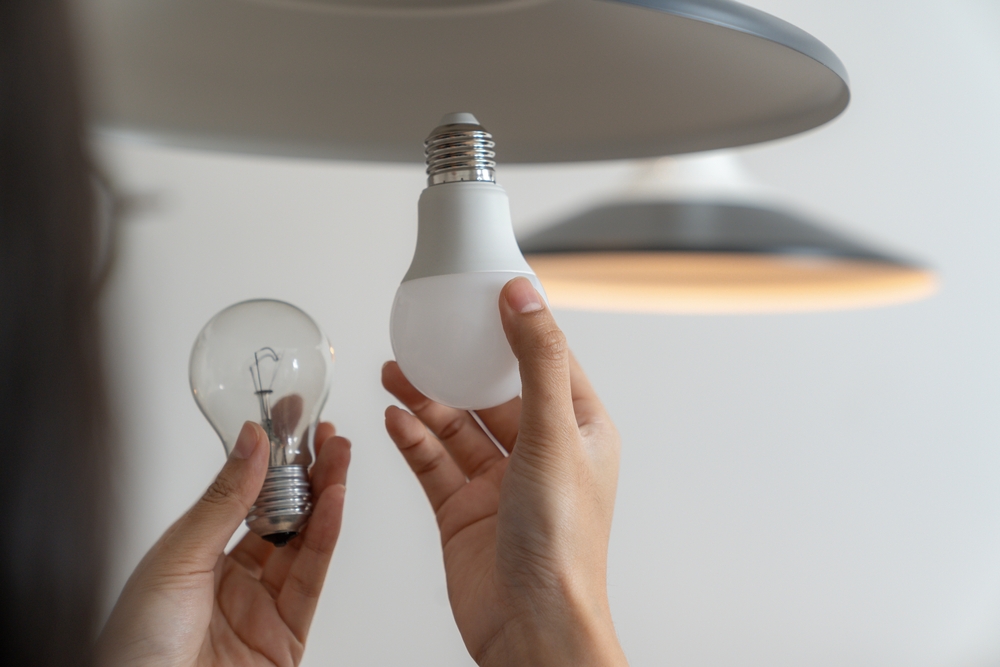
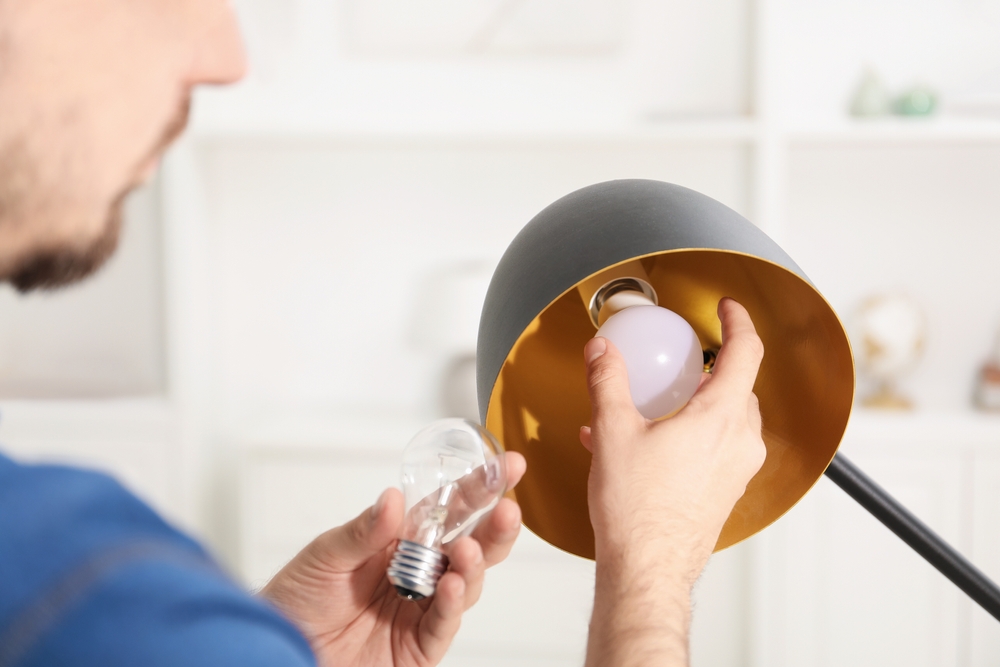
If you are replacing a bulb, switch off the light and allow the old bulb to cool before removing it. Check the markings and compare them with the specifications of the replacement product.
It is also worth checking whether your light uses a replaceable bulb or an integrated LED module. Some modern fittings have built-in LED light sources, meaning the whole fitting or a specific component may need replacing when the light source fails.
If you are unsure about compatibility, a qualified electrician can help identify a suitable replacement.
2. Understand Lumens and Watts
Lumens and watts are often displayed prominently on bulb packaging, but they describe different things.
Lumens (lm) measure the amount of visible light a bulb produces. A higher lumen figure generally indicates a brighter bulb.
Watts (W) measure electrical power consumption. Traditional incandescent bulbs required more watts to produce a given level of brightness, whereas LEDs can provide comparable light output using considerably less electricity.
This distinction matters when replacing older bulbs. Choosing a replacement based solely on wattage may result in lighting that is too dim or unnecessarily bright.
The table below provides approximate comparisons between traditional incandescent bulbs and LED alternatives.
| Traditional incandescent bulb | Approximate equivalent brightness |
|---|---|
| 25W | 250 lumens |
| 40W | 470 lumens |
| 60W | 800 lumens |
| 75W | 1,050 lumens |
| 100W | 1,520 lumens |
These figures are indicative rather than exact. The light output of individual products varies, so check the lumen rating on the packaging.
The required brightness also depends on the room. A bedside lamp may need relatively little light, while a kitchen worktop or commercial workspace may require brighter illumination to support everyday tasks.
3. Choose the Right Colour Temperature
Brightness is only one part of choosing suitable lighting. Colour temperature also affects how a room looks and feels.
Measured in kelvin (K), colour temperature describes the appearance of the light. Lower values produce warmer, more yellowish light, while higher values generally produce cooler, whiter light.
| Colour temperature | Appearance | Typical applications |
|---|---|---|
| 2,700K | Warm white | Living rooms, bedrooms, and relaxing spaces |
| 3,000K | Warm white | Hallways, dining rooms, and general household lighting |
| 4,000K | Neutral white | Kitchens, bathrooms, offices, and work areas |
| 5,000K to 6,500K | Cool white or daylight-style light | Certain workshops and specialist task-lighting applications |
These are general recommendations rather than strict rules. Personal preference, interior design, and the type of work being carried out will all influence the best choice.
For example, a warm white bulb may help create a comfortable atmosphere in a living room, while neutral white lighting may be more suitable for an office where people regularly read documents or work at computer screens.
Businesses should also consider consistency across their premises. Using compatible colour temperatures in connected areas can help create a more uniform appearance, while different lighting may be appropriate for reception areas and practical workspaces.
4. Check Whether the Bulb Is Dimmable
Dimmable lighting allows you to adjust brightness to suit different activities. It can be useful in living rooms and bedrooms, as well as commercial environments where lighting requirements change throughout the day.
However, not every LED bulb is dimmable. The product packaging should clearly state whether dimming is supported.
Compatibility with the existing dimmer switch is equally important. Some older dimmers are designed for higher-wattage incandescent or halogen bulbs and may not work correctly with low-wattage LEDs.
This can cause flickering, buzzing, or inconsistent dimming. In some cases, the dimmer switch may need to be replaced with a compatible model.
If your lights behave unexpectedly after an LED upgrade, the problem may relate to the dimmer or other components rather than the bulb itself. An electrician can assess the installation and recommend an appropriate solution.
Which Light Bulbs Are Best for Different Rooms?
The most suitable lighting depends on how a space is used. A bedroom has different requirements from a kitchen, while an office may need consistent illumination to support concentration and reduce discomfort.
The following recommendations provide a useful starting point.
Living Rooms and Bedrooms
Living rooms and bedrooms are often used for relaxing, making warm white LED bulbs around 2,700K a popular choice.
The brightness required will depend on the size of the room and the number and position of the light fittings. A combination of ceiling lights, wall lights, and lamps can provide greater flexibility than relying on a single bright light source.
Dimmable LEDs can also help you adjust the lighting throughout the day, provided the bulbs and controls are compatible.
Kitchens and Bathrooms
Kitchens often benefit from brighter lighting around worktops, where good visibility is important for food preparation. LED bulbs around 3,000K to 4,000K can be suitable, depending on the desired appearance.
Bathrooms may also benefit from neutral white lighting, particularly around mirrors where clear visibility is useful.
In both rooms, the suitability of the fitting matters as much as the bulb itself. Bathrooms have specific electrical safety requirements, particularly in areas close to baths and showers. The appropriate equipment depends on the location and the conditions in which it will operate.
If you are installing new bathroom lighting or changing existing fittings, consult a qualified electrician to ensure the installation meets the relevant safety requirements.
Offices and Commercial Workspaces
Commercial lighting needs to support the work being carried out while providing comfortable and consistent illumination.
Neutral white lighting around 4,000K is often a useful starting point for offices, although the appropriate specification depends on the tasks, layout, and characteristics of the space.
Brightness and light distribution are also important. A bulb that appears sufficiently bright in a small room may not provide adequate illumination across a larger workspace.
For businesses still using fluorescent tubes, an LED upgrade may provide an opportunity to review the wider lighting installation. The existing fittings, controls, and electrical arrangements should be assessed before replacement products are selected.
Outdoor Areas
Outdoor lighting can improve visibility around entrances, pathways, car parks, and building perimeters. LED products are often suitable because of their energy efficiency and wide availability.
However, outdoor lights must use fittings designed for the conditions in which they will operate. Check the manufacturer’s guidance on weather resistance and the fitting’s ingress protection (IP) rating, which indicates its protection against dust and moisture.
Motion sensors and timers may also help ensure lights operate when needed, particularly around entrances and less frequently used areas.
For commercial premises, the lighting specification should take account of the size of the area and the visibility required for safe access.
How Can You Make Your Lighting More Energy Efficient?
Replacing inefficient bulbs with LEDs is a practical way to reduce electricity consumption, but the benefits also depend on how lighting is planned and used.
There are several measures that homeowners and businesses can consider.
- Replace inefficient bulbs with suitable LEDs. Select products that provide the required brightness while consuming less electricity than the previous bulbs.
- Switch off unnecessary lighting. Avoid leaving lights on in unoccupied rooms, particularly in areas that are used infrequently.
- Make use of natural daylight. Where practical, arrange workspaces to take advantage of daylight without introducing excessive glare.
- Consider suitable lighting controls. Timers and motion sensors can help reduce unnecessary lighting in appropriate settings.
- Review the overall lighting layout. A well-planned installation can provide better illumination without requiring excessive numbers of fittings.
For commercial properties, an LED upgrade may also be an opportunity to assess whether existing fittings are suitable for continued use. Older installations may have inefficient lighting layouts or controls that could be improved as part of a wider electrical project.
It is important to consider the installation as a whole rather than assuming that changing every bulb will automatically deliver the best results.
How BETEC Electrical Can Help
Choosing the right light bulb is relatively straightforward once you understand the basics. However, if you are upgrading fittings, addressing lighting problems, or improving the lighting throughout a property, professional electrical advice can help you make informed decisions.
Electrical Contractors in Guildford, BETEC Electrical, provides reliable electrical services for homes and businesses across Surrey. With over 40 years of hands-on industry experience, our team delivers electrical solutions with a strong focus on safety, quality, and compliance.
Our fully accredited electricians can help with electrical work tailored to your property’s requirements, whether you are improving lighting in your home or reviewing the electrical systems within a commercial premises.
If you need advice on lighting installations or would like to discuss an electrical project, get in touch with BETEC Electrical today to find out how our team can help.